
Leídos 271 Comentario 0
ST36
足三里 (Zú Sān Lǐ)
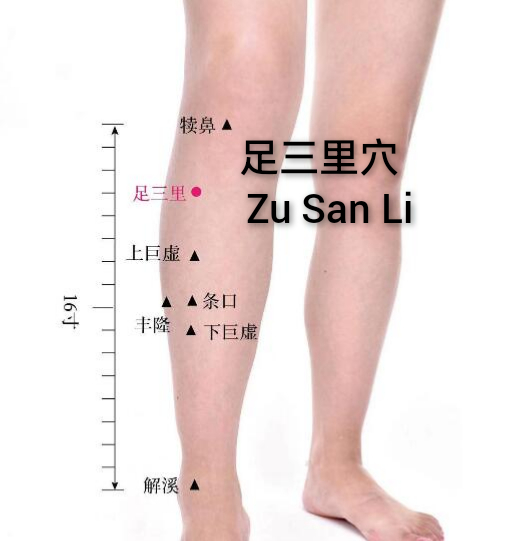
ST36 (足三里, Zú Sān Lǐ)
English Name:
Leg Three Miles
Meridian:
Stomach Meridian of Foot-Yangming (足阳明胃经)
Acupoint Code:
ST36
Functions
- Drains dampness from the Spleen.
- Stimulates the generation of Stomach qi.
Location
On the lateral side of the lower leg, 3 cun below Dú Bí (犊鼻, ST35), one finger-breadth lateral to the anterior crest of the tibia, along the line connecting Dú Bí (ST35) and Jiě Xī (解溪, ST41).
Anatomy
- Superficial Layer: Contains the lateral cutaneous nerve of the calf.
- Subcutaneous Layer: Includes branches of the superficial peroneal nerve and small veins.
- Deep Fascia: Covers the tibialis anterior muscle, creating palpable tension upon penetration.
- Tibialis Anterior Muscle: Beneath the deep fascia, hugging the tibia. This layer is key for effective stimulation.
- Interosseous Membrane: Below the tibialis anterior muscle; home to the anterior tibial artery, vein, and deep peroneal nerve.
- Tibialis Posterior Muscle: Behind the interosseous membrane, located between flexor digitorum longus and flexor hallucis longus.
- Posterior Leg Neurovascular Bundle: Includes the posterior tibial artery, vein, and tibial nerve (contacted only when inserted beyond 2 cun).
Indications
- Digestive Disorders: Stomach pain, vomiting, hiccups, abdominal distension, diarrhea, constipation, and dysentery.
- Respiratory Conditions: Cough, asthma, and palpitations.
- Mental and Neurological Issues: Insomnia, mania, and dizziness.
- Chronic Illnesses: Fatigue, edema, and malnutrition.
- Musculoskeletal Issues: Knee pain, paralysis, leg weakness, and beriberi.
Needling Technique
- Insertion Depth: 1–2 cun vertically.
- Insertion Layers:
- Skin: Contains the lateral cutaneous nerve.
- Subcutaneous Tissue: Superficial nerves and veins.
- Deep Fascia: Generates a "breakthrough" sensation.
- Tibialis Anterior Muscle: Effective layer for stimulation.
- Interosseous Membrane: Pierced at ~1.3 cun; creates a distinct sensation upon crossing.
Clinical Applications
Modern Acupuncture Uses:
- Gastrointestinal Disorders: Acute and chronic gastritis, duodenal ulcers, dysentery, and intestinal obstruction.
- Hepatic Issues: Hepatitis and toxic hepatitis.
- Cardiovascular Conditions: Hypertension, hyperlipidemia, coronary heart disease, and angina.
- Respiratory Disorders: Bronchitis and asthma.
- Genitourinary Issues: Nephritis, renal colic, and bladder inflammation.
- Mental Health: Insomnia and stress disorders.
- Musculoskeletal Complaints: Rheumatic fever, paralysis, and knee pain.
Point Combinations
- For weak legs/paralysis: Combine with Chōng Yáng (ST42), Pū Cān (BL67), Fēi Yáng (BL58), and Fù Liū (KI7).
- For excessive menstrual bleeding: Use with Tiān Shū (ST25), Sān Yīn Jiāo (SP6), Shèn Shū (BL23), and Xíng Jiān (LR2).
- For dizziness: Combine with Qū Chí (LI11), Fēng Lóng (ST40), and Sān Yīn Jiāo (SP6).
- For breast abscesses: Pair with Liáng Qiū (ST34), Qī Mén (LR14), Nèi Guān (PC6), and Jiān Jǐng (GB21).
- For stomach pain (post-gastrectomy): Combine with Shàng Jù Xū (ST37), Sān Yīn Jiāo (SP6), and points near the incision.
- For acute toxic hepatitis: Use with Yáng Líng Quán (GB34) and Xíng Jiān (LR2).
Effects
- Boosts Stomach qi and digestive function.
- Drains dampness to strengthen the Spleen.
Additional Notes
- This point is classified as the "He-Sea" point of the Stomach Meridian.
- Known for its tonic effects, Zú Sān Lǐ (ST36) is one of the most widely used points for health preservation.
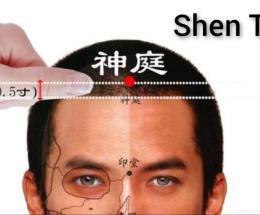 DU-24 神庭穴 (Shén Tíng)
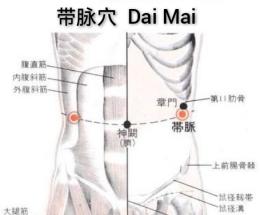 GB41 带脉 (Dài Mài)
-
Read More

DU26 水沟穴 (Shuǐ Gōu)
DU26 水沟穴 (Shuǐ Gōu) DU26 水沟穴 (Shuǐ Gōu) (También conocido como Rén Zhōng 人中穴) Ubicación Ubicado en la cara, en la unión del tercio superior y medio del surco filtrum. Anatomía Músculo: Músculo orbicular de los labios Vasos: Arteria ... -
Read More

LI4 (合谷, Hé Gǔ )
LI4 (合谷, Hé Gǔ ) LI4 (Hé Gǔ) 合谷穴 Meridiano Pertenece al meridiano Yangming del Intestino Grueso de la mano (手阳明大肠经). Es el Punto Yuan-Primario (原穴). Funciones y Acciones Regula el Qi y la Sangre: Promueve la circulación del Qi y... -
Read More

SJ17 (翳风穴, Yì Fēng )
SJ17 (翳风穴, Yì Fēng ) SJ 17 (翳风穴, Yì fēng) Meridiano Meridiano Shaoyang del Sanjiao de la mano (手少阳三焦经). Punto común de acupuntura. Funciones e Indicaciones Tonifica el Qi y suple el Yang. Método de Tratamiento Para condiciones fr... -
Read More

ST 4 (大迎穴, Dà Yíng )
ST 4 (大迎穴, Dà Yíng ) ST 4 (大迎穴, Dà yíng) Meridiano Meridiano del Estómago (胃经). Punto de acupuntura. Anatomía Ubicación: En el borde anterior del músculo masetero, en su punto de inserción. En la parte frontal, se encuentran la arter... -
Read More

ST 7 (下关穴, Xià Guān )
ST 7 (下关穴, Xià Guān ) ST 7 (下关穴, Xià guān) Punto de Acupuntura del Meridiano del Estómago, ubicado en la cara Funciones El Qi y la Sangre del Meridiano del Estómago se aclaran en este punto, con los aspectos claros ascendiendo y los as... -
Read More

LI 24 (口禾髎, Kǒu Hé Liáo)
LI 24 (口禾髎, Kǒu Hé Liáo) LI 24 (口禾髎, Kou He Liao) Pertenece a la Meridian de Yangming del Gran Intestino de la Mano (手阳明大肠经) Ubicación simple: Kou He Liao se encuentra justo debajo del borde externo de las fosas nasales, aproxima... -
Read More

ST 4 (地仓, Dì Cāng)
ST 4 (地仓, Dì Cāng) ST 4 地仓 (Dì Cāng) Meridiano: Pertenece al Meridiano Yangming del Estómago (ST). También es un punto de encuentro de los meridianos Yang Qiao y de los meridianos Yangming de la Mano y el Pie. Ubicación: Se encuentra en ... -
Read More

ST 6 (颊车, Jiá Chē)
ST 6 (颊车, Jiá Chē) ST 6 颊车 (Jiá Chē) Meridiano: Pertenece al Meridiano Yangming del Estómago (ST). Funciones y Acciones: Transporta las sustancias sutiles del Meridiano del Estómago hacia la cabeza. Método de Tratamiento: Si hay frío, se... -
Read More

ST 2 (四白, Sì Bái)
ST 2 (四白, Sì Bái) ST 2 四白 (Sì Bái) Meridiano: Pertenece al Meridiano Yangming del Estómago (ST). Funciones y Acciones: Dispersa el calor del bazo y proporciona agua y humedad a la parte superior del cuerpo (cabeza). Método de Tratamiento... -
Read More

GB 14 (阳白, Yáng Bái)
GB 14 (阳白, Yáng Bái) GB 14 (阳白 Yáng Bái) Meridiano: Un punto comúnmente utilizado en el Meridiano Shaoyang del Pie de la Vesícula Biliar (GB). Funciones y Acciones: Promueve el ascenso del Qi y fortalece el Yang. Método de Tratamiento: S... -
Read More

Niè Sān Zhēn 颞三针
Niè Sān Zhēn 颞三针 Niè Sān Zhēn 颞三针 Ubicación: Se encuentra 2 pulgadas por encima del vértice de la oreja, con 1 pulgada adicional hacia adelante y hacia atrás. Indicaciones (uso principal): Trastornos motores, como hemiplejía (parálisis... -
Read More

GB-19 脑空 (Nǎo Kōng)
GB-19 脑空 (Nǎo Kōng) GB-19 脑空 (Nǎo Kōng) Canal de Acupuntura: Canal de la Vesícula Biliar del Pie Shaoyang Código en inglés: GB-19 Funciones y Acciones: Dispersa el viento y abre los orificios (libera bloqueos y mejora la circulación). Mé... -
Read More

DU-16, BL-9 脑户 (Nǎo Hù)
DU-16, BL-9 脑户 (Nǎo Hù) DU-16, BL-9 脑户 (Nǎo Hù) Canales de Acupuntura: Canal Gobernante (Du Mai) y Canal de la Vesícula Biliar del Pie Taiyang Código en inglés: DU-16, BL-9 Ubicación: Se encuentra 2.5 pulgadas directamente por encima de ... -
Read More

DU-20 百会 (Bǎi Huì)
DU-20 百会 (Bǎi Huì) DU-20 百会 (Bǎi Huì) Canal de Acupuntura: Canal Gobernante (Du Mai) Código en inglés: DU-20 Ubicación: Se encuentra 7 pulgadas por encima de la línea posterior del cabello, en la línea media de la parte superior de la ca... -
Read More

GB-13 本神穴 (Běn Shén)
GB-13 本神穴 (Běn Shén) GB-13 本神穴 (Běn Shén) Canal de Acupuntura: Meridiano de la Vesícula Biliar del Pie-Shaoyang Código en inglés: GB-13 Funciones: Absorbe la humedad y elimina la turbidez. Métodos de Tratamiento: Para condiciones de fr... -
Read More

DU-24 神庭穴 (Shén Tíng)
DU-24 神庭穴 (Shén Tíng) DU-24 神庭穴 (Shén Tíng) Canal de Acupuntura: Vaso Gobernador (Du Mai) Código en inglés: DU-24 Funciones: Despeja la cabeza y dispersa el viento. Calma la mente y alivia el espíritu. Ubicación: Descripción: Situado a... -
Read More

ST36 足三里 (Zú Sān Lǐ)
ST36 足三里 (Zú Sān Lǐ) ST36 (足三里, Zú Sān Lǐ) English Name: Leg Three Miles Meridian: Stomach Meridian of Foot-Yangming (足阳明胃经) Acupoint Code: ST36 Functions Drains dampness from the Spleen. Stimulates the generation of Stomach qi. L... -
Read More

GB41 带脉 (Dài Mài)
GB41 带脉 (Dài Mài) GB41 (带脉, Dài Mài) Nombre en inglés: Belt Vessel Meridiano: Meridiano de la Vesícula Biliar de la Pierna-Shaoyang (足少阳胆经) Código de punto: GB41 Ubicación: Se encuentra en el lado lateral del abdomen, 1.8 cun por de... -
Read More

CV12 中脘 (Zhōng Wǎn)
CV12 中脘 (Zhōng Wǎn) CV12 (中脘, Zhōng Wǎn) Nombre en inglés: Middle Cavity Meridiano: Meridiano Ren (任脉), punto de encuentro de los meridianos Hand-Taiyang, Shaoyang y Foot-Yangming Código de punto: CV12 Función: • Armoniza el estómago, ... -
Read More

SP6 ( 三阴交 Sān Yīn Jiāo)
SP6 ( 三阴交 Sān Yīn Jiāo) SP6 (三阴交, Sān Yīn Jiāo) Meridiano: Meridiano de la pierna Taiyin (Bazo), punto de encuentro de los tres meridianos Yin (Hígado, Bazo, Riñón) Código del punto de acupuntura: SP6 Función • Estimula la circulación ...