ST36
足三里 (Zú Sān Lǐ)
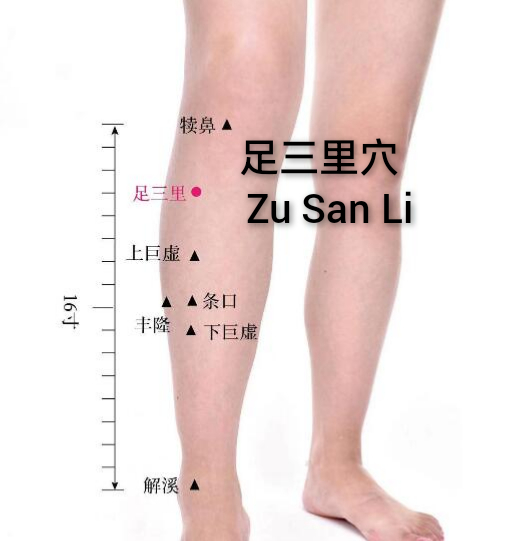
ST36 (足三里, Zú Sān Lǐ)
English Name:
Leg Three Miles
Meridian:
Stomach Meridian of Foot-Yangming (足阳明胃经)
Acupoint Code:
ST36
Functions
- Drains dampness from the Spleen.
- Stimulates the generation of Stomach qi.
Location
On the lateral side of the lower leg, 3 cun below Dú Bí (犊鼻, ST35), one finger-breadth lateral to the anterior crest of the tibia, along the line connecting Dú Bí (ST35) and Jiě Xī (解溪, ST41).
Anatomy
- Superficial Layer: Contains the lateral cutaneous nerve of the calf.
- Subcutaneous Layer: Includes branches of the superficial peroneal nerve and small veins.
- Deep Fascia: Covers the tibialis anterior muscle, creating palpable tension upon penetration.
- Tibialis Anterior Muscle: Beneath the deep fascia, hugging the tibia. This layer is key for effective stimulation.
- Interosseous Membrane: Below the tibialis anterior muscle; home to the anterior tibial artery, vein, and deep peroneal nerve.
- Tibialis Posterior Muscle: Behind the interosseous membrane, located between flexor digitorum longus and flexor hallucis longus.
- Posterior Leg Neurovascular Bundle: Includes the posterior tibial artery, vein, and tibial nerve (contacted only when inserted beyond 2 cun).
Indications
- Digestive Disorders: Stomach pain, vomiting, hiccups, abdominal distension, diarrhea, constipation, and dysentery.
- Respiratory Conditions: Cough, asthma, and palpitations.
- Mental and Neurological Issues: Insomnia, mania, and dizziness.
- Chronic Illnesses: Fatigue, edema, and malnutrition.
- Musculoskeletal Issues: Knee pain, paralysis, leg weakness, and beriberi.
Needling Technique
- Insertion Depth: 1–2 cun vertically.
- Insertion Layers:
- Skin: Contains the lateral cutaneous nerve.
- Subcutaneous Tissue: Superficial nerves and veins.
- Deep Fascia: Generates a "breakthrough" sensation.
- Tibialis Anterior Muscle: Effective layer for stimulation.
- Interosseous Membrane: Pierced at ~1.3 cun; creates a distinct sensation upon crossing.
Clinical Applications
Modern Acupuncture Uses:
- Gastrointestinal Disorders: Acute and chronic gastritis, duodenal ulcers, dysentery, and intestinal obstruction.
- Hepatic Issues: Hepatitis and toxic hepatitis.
- Cardiovascular Conditions: Hypertension, hyperlipidemia, coronary heart disease, and angina.
- Respiratory Disorders: Bronchitis and asthma.
- Genitourinary Issues: Nephritis, renal colic, and bladder inflammation.
- Mental Health: Insomnia and stress disorders.
- Musculoskeletal Complaints: Rheumatic fever, paralysis, and knee pain.
Point Combinations
- For weak legs/paralysis: Combine with Chōng Yáng (ST42), Pū Cān (BL67), Fēi Yáng (BL58), and Fù Liū (KI7).
- For excessive menstrual bleeding: Use with Tiān Shū (ST25), Sān Yīn Jiāo (SP6), Shèn Shū (BL23), and Xíng Jiān (LR2).
- For dizziness: Combine with Qū Chí (LI11), Fēng Lóng (ST40), and Sān Yīn Jiāo (SP6).
- For breast abscesses: Pair with Liáng Qiū (ST34), Qī Mén (LR14), Nèi Guān (PC6), and Jiān Jǐng (GB21).
- For stomach pain (post-gastrectomy): Combine with Shàng Jù Xū (ST37), Sān Yīn Jiāo (SP6), and points near the incision.
- For acute toxic hepatitis: Use with Yáng Líng Quán (GB34) and Xíng Jiān (LR2).
Effects
- Boosts Stomach qi and digestive function.
- Drains dampness to strengthen the Spleen.
Additional Notes
- This point is classified as the "He-Sea" point of the Stomach Meridian.
- Known for its tonic effects, Zú Sān Lǐ (ST36) is one of the most widely used points for health preservation.
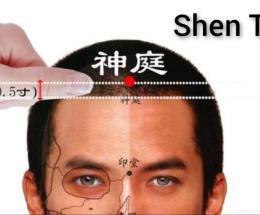 DU-24 神庭穴 (Shén Tíng)
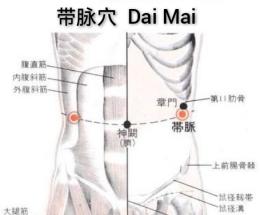 GB41 带脉 (Dài Mài)